EU Hybrid Vehicle Safeguards Could Hit South Africa’s Auto Exports
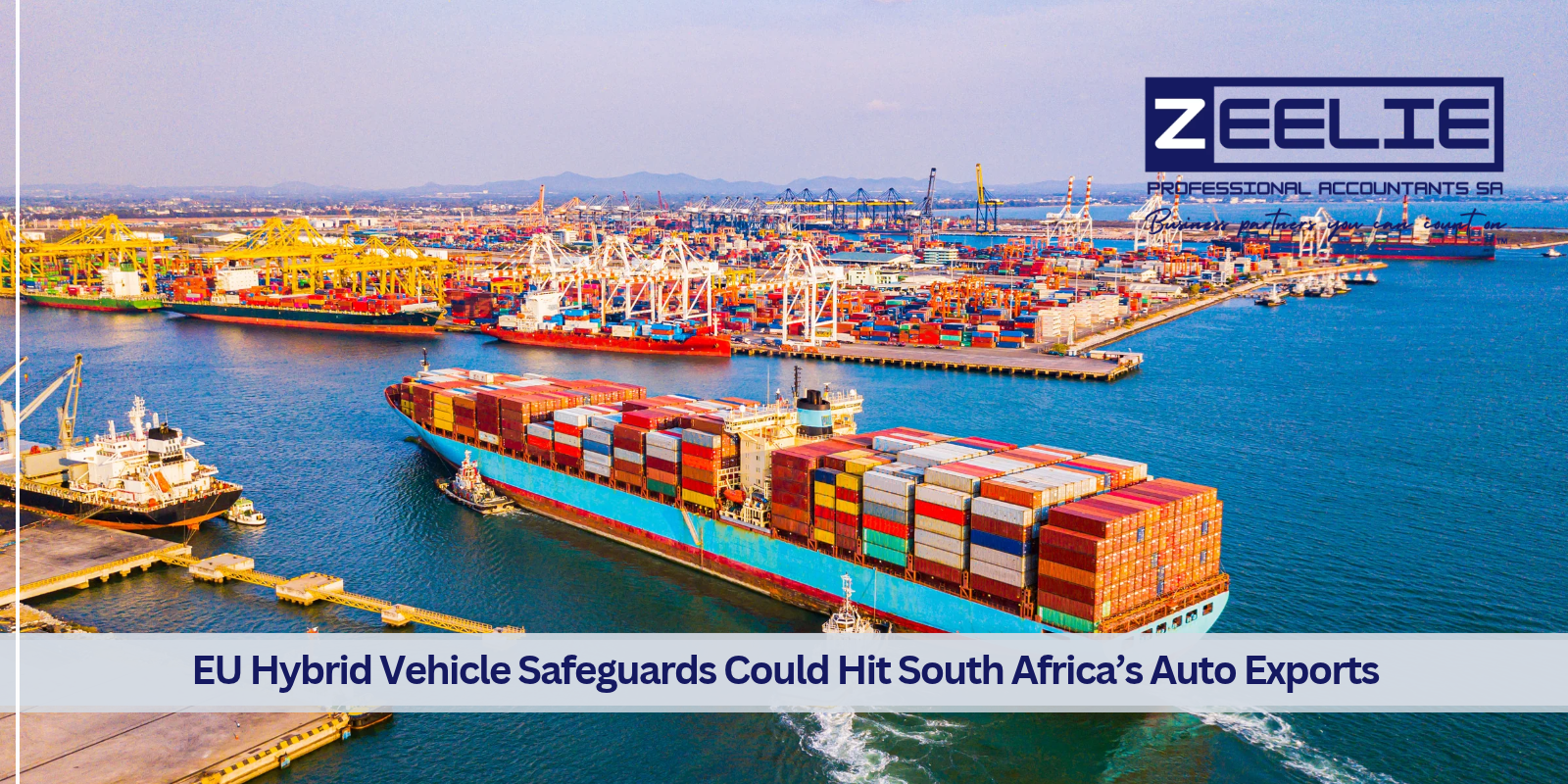
South Africa will seek an exemption or a country-specific quota if the European Union imposes safeguard measures on hybrid-vehicle imports. The Department of Trade, Industry and Competition (dtic) says about R36 billion worth of exports could be affected, at a time when local carmakers are shifting from internal-combustion engines towards new-energy vehicles.
What the EU is doing
On 30 October, the European Commission opened a safeguard investigation into global imports of new hybrid passenger vehicles. It cites a 49% surge in shipments between 2023 and the 12 months to 30 June.
The EU’s argument is that low-priced imports, driven by fast-growing production and by trade restrictions elsewhere, have eroded the market share and profitability of European carmakers and threaten the industry.
What South Africa says
Deputy Director-General Xolelwa Mlumbi-Peter told lawmakers on Tuesday that the dtic is:
- Assessing whether South Africa qualifies for an exemption under World Trade Organisation rules
- Submitting formal comments to the European Commission
- Verifying data from several angles to understand what the implications would be
She said the department will push to negotiate a country-specific quota to protect exports, similar to the one it secured on steel.
The 3% and 9% rules
Under WTO and EU safeguard rules, an individual developing country is exempt from tariffs or quotas if it supplies less than 3% of the bloc’s imports of the targeted product. That protection is lost if all developing countries together supply more than 9%.
This is why the data matters. South Africa’s exemption could depend on its own share and on the combined share of other developing countries, which is outside its control.
Why it matters
- Exports at risk: About R36 billion of South African exports could be affected if the measures go ahead.
- Timing: Local manufacturers are pivoting towards new-energy vehicles, so a restriction on hybrids could complicate that transition.
- Precedent: South Africa has negotiated a country-specific quota on steel, which it hopes to repeat here.
What to watch
- Whether the Commission imposes provisional or final measures after its investigation.
- South Africa’s formal submission, and whether it qualifies for an exemption.
- The import shares of South Africa and other developing countries, against the 3% and 9% thresholds.
- Whether a country-specific quota is negotiated.
What it means for you
- For the auto sector: Exporters and suppliers face uncertainty until the EU decides.
- For workers and communities: The sector supports many jobs, so the outcome matters beyond the factory gate.
- For consumers: No direct change to local vehicle prices has been flagged.
The bottom line
South Africa isn’t the target of the EU’s investigation, but it could be caught in the fallout. The dtic is gathering data and preparing a case for an exemption or a dedicated quota. How those talks go will help decide whether R36 billion in auto exports stays safe.
Source: Statements by dtic Deputy Director-General Xolelwa Mlumbi-Peter to lawmakers, as reported in the original article.
Do you need a Quote for our Tax and Accounting Services?
Contact our team via any of the following channels to get a proposal for your accounting and tax services:
Subscribe to our newsletters.
Purchase Contract TEMPLATES and BUSINESS STATIONERY at www.ZEELIEONLINE.com
Disclaimer:
The views or opinions expressed on this site are solely those of the original authors and other contributors.
The material and information contained on this website is for general information purposes only.
This information is for general purposes only. Don't use this information for making business, legal and tax decisions without consulting a professional.
We do not make any express or implied representation, as to the completeness or accuracy of the information published.
Tax law regularly changes, so any tax information on this site could become outdated.
We are not responsible for any other websites that you may access through links on our website.
ZPA accepts no liability for any loss or damage arising from the use of any material on this site.