South Africa’s Middle Class Is Paying a “Double Tax”
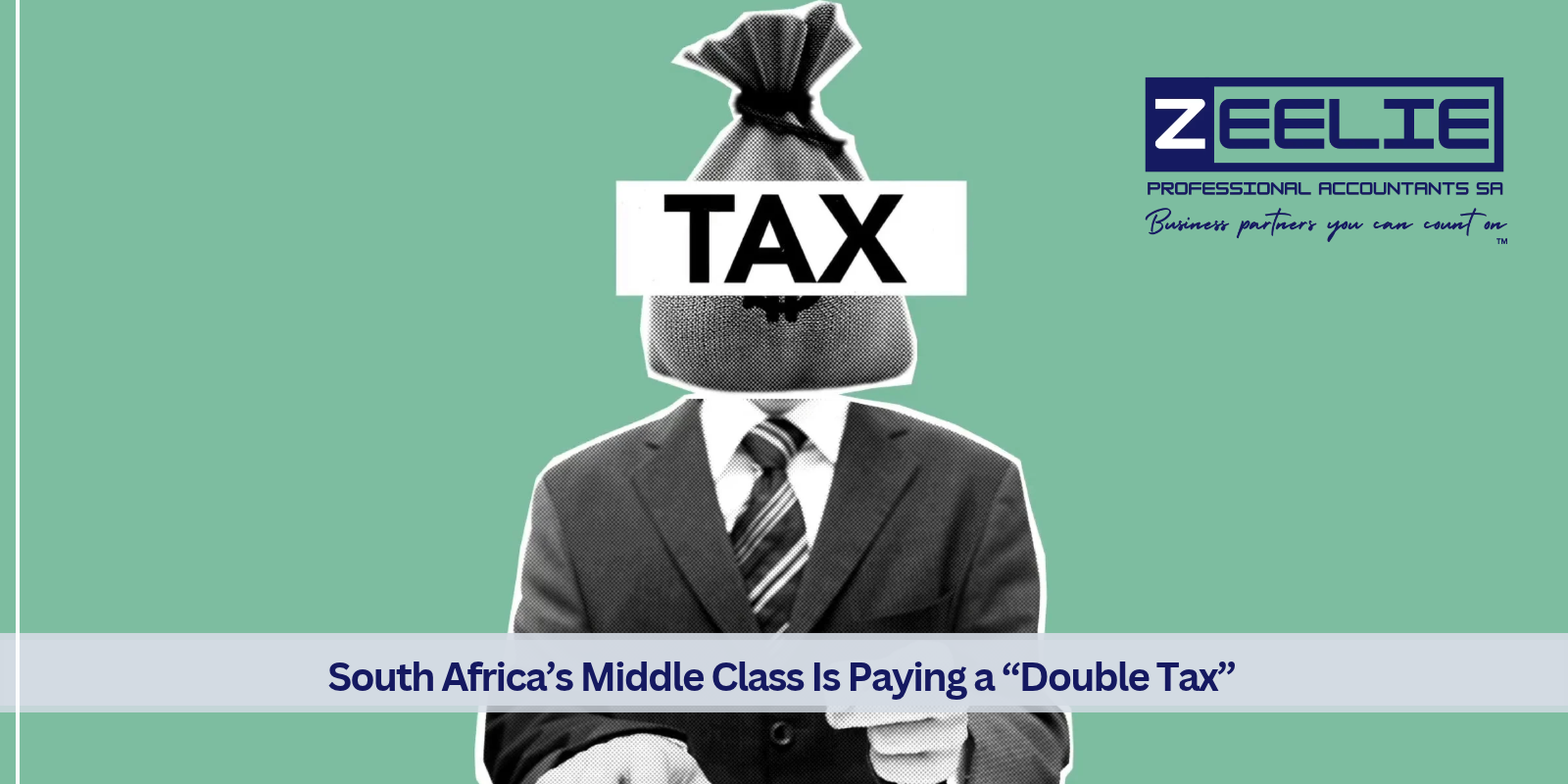
South Africa’s middle class pays taxes to fund public services, then spends more of its income on private alternatives for education, healthcare, transport and security. Economist and strategist Xhanti Payi, speaking on the CheckPoint podcast, calls working households the “shock absorbers” of the economy, because they carry costs that public services should cover.
What “double taxation” means here
Payi’s point is that households contribute through taxes, but when public services are unreliable they must also pay for private substitutes to protect their families and maintain their standard of living. That leaves less money to spend, save or invest.
The strain is sharper in a country with high inequality, where many households classed as middle class lack the disposable income usually associated with that group.
Where the money goes
- Education. South African parents clearly prefer private schooling, but it’s often unaffordable. Payi said some parents are pulling children out of private primary schools while planning to enrol them in private high schools later, to improve their chances of getting into university. Providers like Curro have tapped into this demand with more affordable offerings, but its primary school operations are now under pressure as families struggle with fees. Growing unpaid school accounts point the same way. In Payi’s words, parents are sacrificing as much as they can so their children have some access to the future.
- Healthcare. Those who can afford it pay for private medical care because they can’t rely on public facilities.
- Security. Private security has long been a household expense, and Payi says people are now also paying for private firefighting services to protect their property.
- Transport. For people who need a car because public transport isn’t reliable, the cost is heavy. Payi said some spend as much as 40% of their income on transport.
Family obligations add to the load
The social support system is meant to help people who can’t work, including children, older people and those with illnesses or disabilities, but it doesn’t provide adequate support. Working households therefore often support relatives who cannot work or cannot find employment, which makes things harder for people already struggling with their own expenses.
Why it matters for the whole economy
The middle class is usually expected to drive growth. Households with surplus income buy cars, build homes, purchase durable goods and invest in businesses. That creates demand, supports jobs and generates tax revenue for infrastructure and social support.
When transport, school fees, healthcare and security absorb most of a household’s income, little is left for discretionary spending or investment. It also makes starting a business harder. As Payi asked, if the middle class can’t consume, where will new entrepreneurs find clients?
A possible fix: reliable public transport
Payi suggested that reliable, affordable public transport could ease the pressure. A functioning rail system, for example, would give commuters a cheaper alternative to driving and more predictable travel budgets. Lower transport costs would leave more disposable income and could improve productivity by helping workers get to their jobs safely and on time.
The bottom line
The middle class is meant to be an engine of growth, but when it’s paying twice for basic services, the engine stalls. Improving the reliability of public services, starting with transport, would help households and the wider economy at the same time.
Source: Xhanti Payi on the CheckPoint podcast, as reported by Daily Investor (22 October 2026).
Do you need a Quote for our Tax and Accounting Services?
Contact our team via any of the following channels to get a proposal for your accounting and tax services:
Subscribe to our newsletters.
Purchase Contract TEMPLATES and BUSINESS STATIONERY at www.ZEELIEONLINE.com
Disclaimer:
The views or opinions expressed on this site are solely those of the original authors and other contributors.
The material and information contained on this website is for general information purposes only.
This information is for general purposes only. Don't use this information for making business, legal and tax decisions without consulting a professional.
We do not make any express or implied representation, as to the completeness or accuracy of the information published.
Tax law regularly changes, so any tax information on this site could become outdated.
We are not responsible for any other websites that you may access through links on our website.
ZPA accepts no liability for any loss or damage arising from the use of any material on this site.