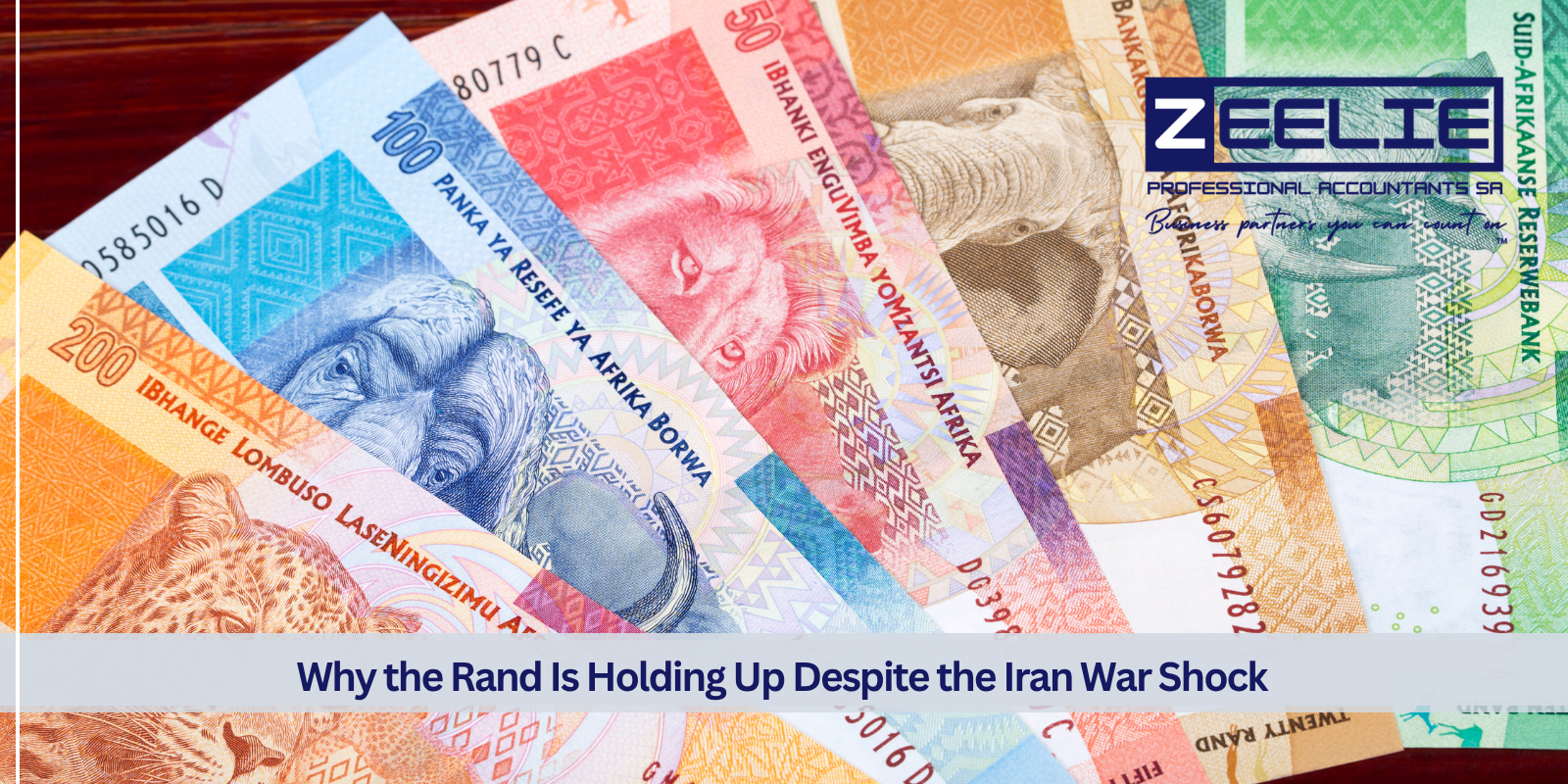
Why the Rand Is Holding Up Despite the Iran War Shock
South African Reserve Bank Governor Lesetja Kganyago says the rand has held up well despite the shock from the Iran war, and he puts that down to growing confidence in the country’s economic outlook. Speaking to Bloomberg TV on the sidelines of the IMF and World Bank meetings in Bangkok on Friday, he offered a measured view: the currency has been resilient, but that doesn’t mean South Africa is out of the woods.
“Cushioned, but not shielded”
In Kganyago’s words, rand resilience has cushioned the shock but has not shielded the country from it. What matters, he said, is that the currency has been less volatile than in the past, a result of a combination of push and pull factors.
What’s behind the rand’s strength
Kganyago pointed to several drivers:
- A lower inflation target. The Reserve Bank lowered its target to 3% last year.
- Fiscal consolidation. Government efforts to stabilise public finances have helped reduce the risk premium investors demand to buy South African bonds.
- Strong commodity prices. Higher prices for exports such as gold and platinum have helped offset the impact of higher fuel costs, keeping the terms of trade on a favourable footing.
What could change it
Continued strength depends on policy staying on track. Kganyago said the rand could weaken if the terms of trade deteriorate, if monetary policy does not stay the course, or if fiscal policy does not stay the course.
Public finances moving in the right direction
South Africa has worked to stabilise its public finances over the past few years, after a decade of overspending. The government is expected to report a growing primary budget surplus, driven by revenue rising faster than non-interest spending, when Finance Minister Enoch Godongwana tables the mid-term budget update next week.
Interest rates: a cautious stance
The Monetary Policy Committee voted unanimously last month to raise the repo rate by 25 basis points to 7.25%, wary of inflation risks from the wars in Iran and Ukraine. Officials said they were adopting a more restrictive stance to stop elevated energy prices from triggering second-round effects that entrench higher inflation.
Kganyago repeated that line, stressing that rate decisions will be taken meeting by meeting. As he put it, the environment is uncertain and the bank will continue to assess the situation.
What it means for you
A steadier rand helps limit imported inflation, including fuel, though it can’t fully offset high global oil prices. Borrowers should also note that interest rates have gone up and the central bank is keeping its options open.
The bottom line
The rand’s resilience reflects policy credibility and supportive commodity prices rather than luck. But the Governor was clear that it depends on discipline continuing across monetary policy, fiscal policy and trade. The mid-term budget update next week will be the next test.
Source: Governor Lesetja Kganyago’s comments to Bloomberg TV, as reported in the original article.
Do you need a Quote for our Tax and Accounting Services?
Contact our team via any of the following channels to get a proposal for your accounting and tax services:
Subscribe to our newsletters.
Purchase Contract TEMPLATES and BUSINESS STATIONERY at www.ZEELIEONLINE.com
Disclaimer:
The views or opinions expressed on this site are solely those of the original authors and other contributors.
The material and information contained on this website is for general information purposes only.
This information is for general purposes only. Don't use this information for making business, legal and tax decisions without consulting a professional.
We do not make any express or implied representation, as to the completeness or accuracy of the information published.
Tax law regularly changes, so any tax information on this site could become outdated.
We are not responsible for any other websites that you may access through links on our website.
ZPA accepts no liability for any loss or damage arising from the use of any material on this site.